
Comparing Visual Field Tests: Humphrey Visual Field Analyzer vs. Virtual Reality Headsets
Our practice has recently moved to performing visual fields using the newly available VR headset.
Visual field tests are essential in eye care, helping ophthalmologists to detect and monitor conditions like glaucoma and neurological vision disorders. Traditionally, the Humphrey Visual Field Analyzer has been the go-to tool for these tests. However, newer technologies, such as virtual reality (VR) headsets offer an alternative that many patients find more comfortable and convenient. Let’s explore the key differences between these two methods and why VR headsets might be the future of visual field testing.
The Humphrey Visual Field Analyzer: The Traditional Approach

The Humphrey Visual Field Analyzer has been widelyused in eye clinics for years. This machine requires the patient to place their head inside a dome-like structure, resting their chin and forehead on supports to keep their head steady. Here’s what you can expect during a Humphrey visual field test:
– **Fixed Positioning:** Patients must hold their head still in a specific position, which can be uncomfortable, especially for those with neck or back problems. This can make the test challenging for some individuals, particularly those who have difficulty staying in one position for an extended period.
– **One Eye at a Time:** The Humphrey Analyzer tests each eye separately. To do this, a patch is placed over the eye not being tested. Patients often report discomfort from the patch, with some even saying it causes a distracting shadow, making the test less pleasant.
– **Technician Supervision:** During the test, a technician is required to monitor the patient closely. The technician ensures that the patient remains properly positioned and follows the test instructions. This human oversight is essential for accurate results but can make the experience feel somewhat clinical and rigid.
Virtual Reality Headsets: A Modern, Patient-Friendly Alternative
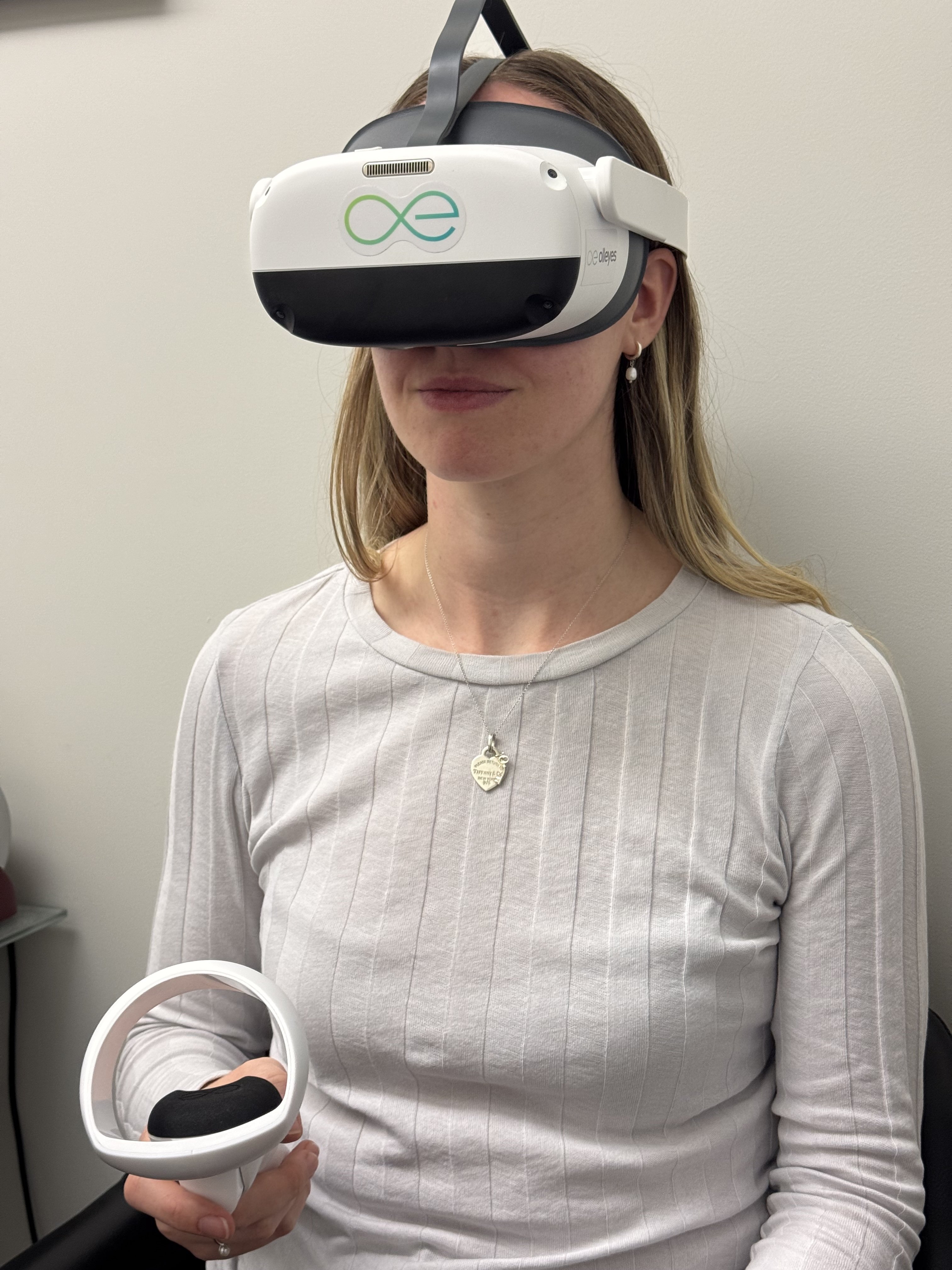 Virtual reality headsets offer a new way to perform visual field tests, with a focus on patient comfort and ease of use. Here’s how the experience with a VR headset differs:
– **Comfortable Positioning:** One of the most significant advantages of VR headsets is that they allow patients to take the test in a variety of positions. Whether sitting in a chair, reclining, or even lying down, patients can find a comfortable position that suits their needs. This flexibility is especially beneficial for those with neck or back issues.
– **Simultaneous Testing of Both Eyes:** Unlike the Humphrey Analyzer, the VR headset tests both eyes at the same time, eliminating the need for an eye patch. This not only makes the test more comfortable but also avoids the common complaint of a shadow caused by the patch, making the testing process more straightforward and less distracting.
– **Virtual Assistance and Eye Tracking:** The VR headset is equipped with a virtual assistant that guides patients through the entire process. The assistant explains how to do the test, monitors progress, and even offers encouragement along the way. This is a significant improvement over the traditional method, where a technician must supervise the test. Additionally, the VR headset includes advanced eye-tracking technology that helps minimize errors, leading to more accurate results.
– **Cloud-Based Data and Real-Time Monitoring:** Another innovative feature of VR headsets is their ability to store data in the cloud. This means that test results can be accessed from anywhere, and progress can be monitored in real-time through a web browser. This is particularly useful for both patients and doctors, as it allows for greater flexibility and convenience in managing eye health.
Patient Preference: VR Headsets Win
In trials conducted with patients, the response to VR headset testing has been overwhelmingly positive. Virtually all patients who have experienced both the Humphrey Analyzer and the VR headset have expressed a clear preference for the VR method. The comfort, convenience, and ease of use offered by VR technology make it a more patient-friendly option, and its innovative features provide a more modern approach to visual field testing.
Conclusion: The Future of Visual Field Testing
While the Humphrey Visual Field Analyzer remains a reliable and widely used tool, the introduction of VR headsets represents a significant advancement in eye care. By offering a more comfortable, convenient, and patient-centered approach, VR headsets are poised to become the preferred method for visual field testing in the future. Whether you’re concerned about comfort during the test, the need for more accurate results, or simply want a more streamlined experience, VR headsets offer an exciting new option that meets these needs and more.